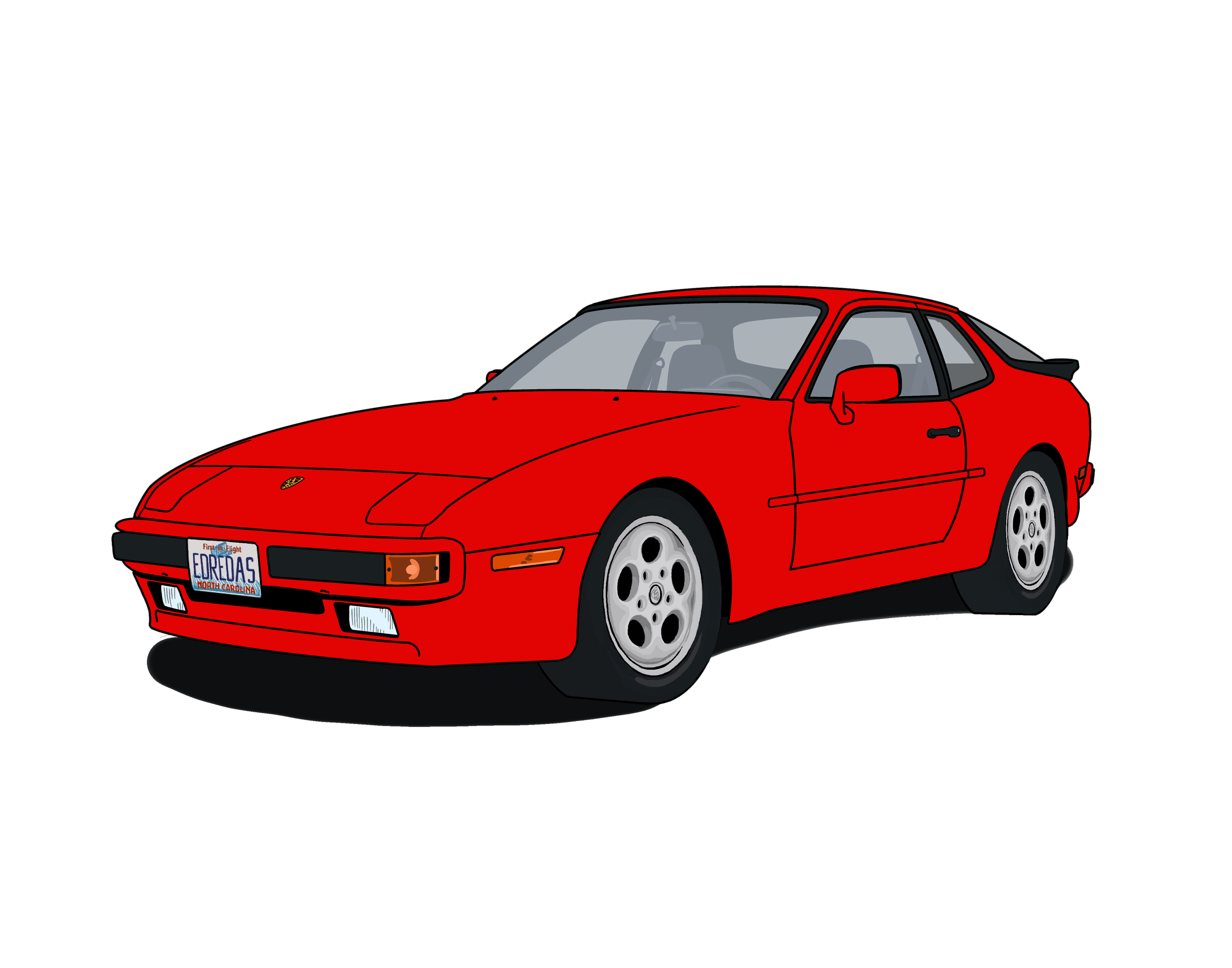
Porsche

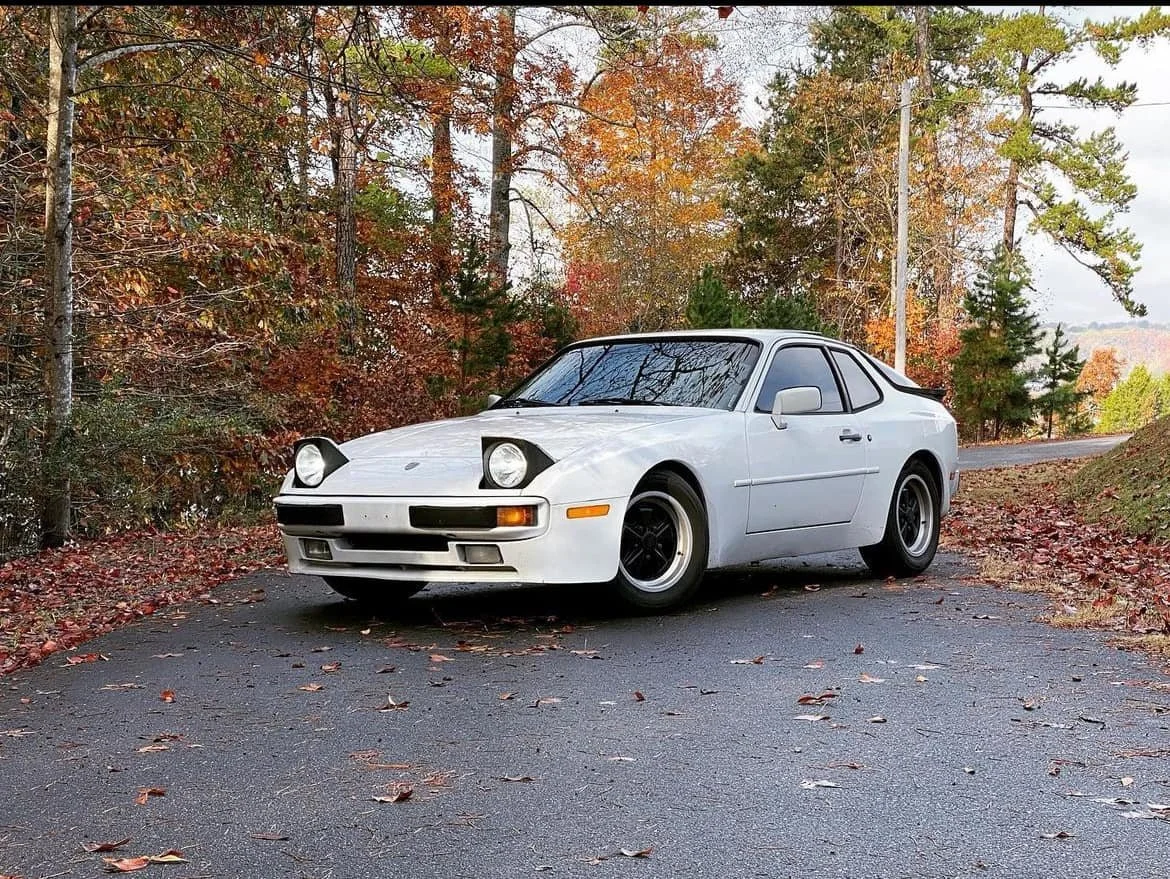
Porsche 944
Introduced in Europe as a 1982 model and to the North American market for the 1983 model year. The Porsche 944 replaced the 924 as the entry level car in Porsche’s lineup. Now boasting an all Porsche developed 2.5L inline four instead of the 2.0L Audi based engine found in the 924. The 944 had 156 SAE NET hp in European trim and 143 SAE NET hp in the American market.
While the 944 was based on the 924 platform that had originally been commissioned by Porsche to be produced as a Volkswagen. So the 924 used a lot of VW parts bin items, including the engine. While the 944 was based on the 924 chassis, the Porsche 944 engine was developed solely by Porsche. Not only was the engine larger and more powerful, but it was more refined than the outgoing engine.
By using counter rotating weighted shafts, often referred to as “balance-shafts”. Porsche was not only able to silence unwanted “booming” noises in the cabin, but also silence the critics that found the 924 engine too ‘buzzy’ for a Porsche.
This specific type of counter rotating shaft setup was developed by Mitsubishi Motors, thus meaning Porsche had to pay them royalties for this design. By having two shafts rotating opposite directions, they canceled out each others horizonal vibrations, while working together to reduce vertical vibrations from the pistons moving in pairs. Mitsubishi took this one step further and set the shafts at different heights which also reduced the engine rocking during acceleration, for smoother performance. Had Porsche used any other balance-shaft design or came up with their own, they could have avoided royalties to Mitsubishi, but in the end they felt that it was worth it.
Unlike the cast iron engine found in the 924, the 944 engine was all aluminum and required no cylinder liners. The cylinders walls used incredibly hard silicon crystals imbedded into the aluminum matrix. This is not a coating of any kind that was applied, but instead the crystals are cast into the cylinder walls. Developed by Kolbenschmitt and dubbed “alusil” for aluminum/silicon, this creates a very robust cylinder wall that could even wear aluminum pistons. To prevent the pistons from being chewed away by the silicon crystals a ferrous iron plating was added to the piston skirts.
cross drilled
As for performance, keep in mind that in 1983 a V8 Camaro Z28 only had 145 hp, so the 944 was no slouch. To flex its dominance over the sleeker outgoing 924, the 944 now had bulging fenders. These fender flares would go on to be copied by many different manufacturers and make the 944 one of the most quintessential 80’s cars.
0-60
Payments & deposits
We accept all major credit and debit cards. We even have Zelle, Cashapp, Square, Venmo, PayPal, and more!
Deposits:
For Bigger jobs there will be a deposit of $1,500 in order to get started. After that we may break up the payments as items are completed.
For instance, a front of engine service would be a total of $3,300 with $1,500 down, and then $1,800 remaining at the end. Sometimes if we are doing other work on your car, we then consider that job complete, send an invoice for the end of that job before moving on to the next job to complete.
This not only helps us keep moving forward with your project, but most of the time everything is paid off by the time the owners pick up the car. Making this a lot easier for them as well.
